
WELCOME BONUS 300%
UP TO €2000 + 100
FREE SPINS
UP TO €2000 + 100
FREE SPINS
Home → Blackjack
Blackjack at Rocknrolla: Variants, Rules and Payouts
Unlimited seats via a split dealer hand
Lightning Blackjack by Evolution offers unlimited player seats, contrasting sharply with the fixed capacity of standard tables. The maximum bet for this high-stakes variant reaches 2,500 EUR per round, accommodating significant bankrolls without table limits. This structure allows multiple whales to wager simultaneously on a single deal.
The game features Lightning Multipliers up to 25x on winning hands, providing massive payout potential beyond standard rules. Unlike Quantum Blackjack Plus which caps at 1,000x on specific card combos, this version applies multipliers to general wins. Players can engage with high volatility outcomes while maintaining access to the core blackjack mechanics.
Standard Blackjack Liberal Vegas Strip restricts seating and bets, typically capping around 1,000 EUR in party formats. The split dealer hand mechanic ensures that every seat receives an independent opportunity to beat the dealer's final total. This setup eliminates the bottleneck of traditional shoe games where players wait for previous bets to resolve.
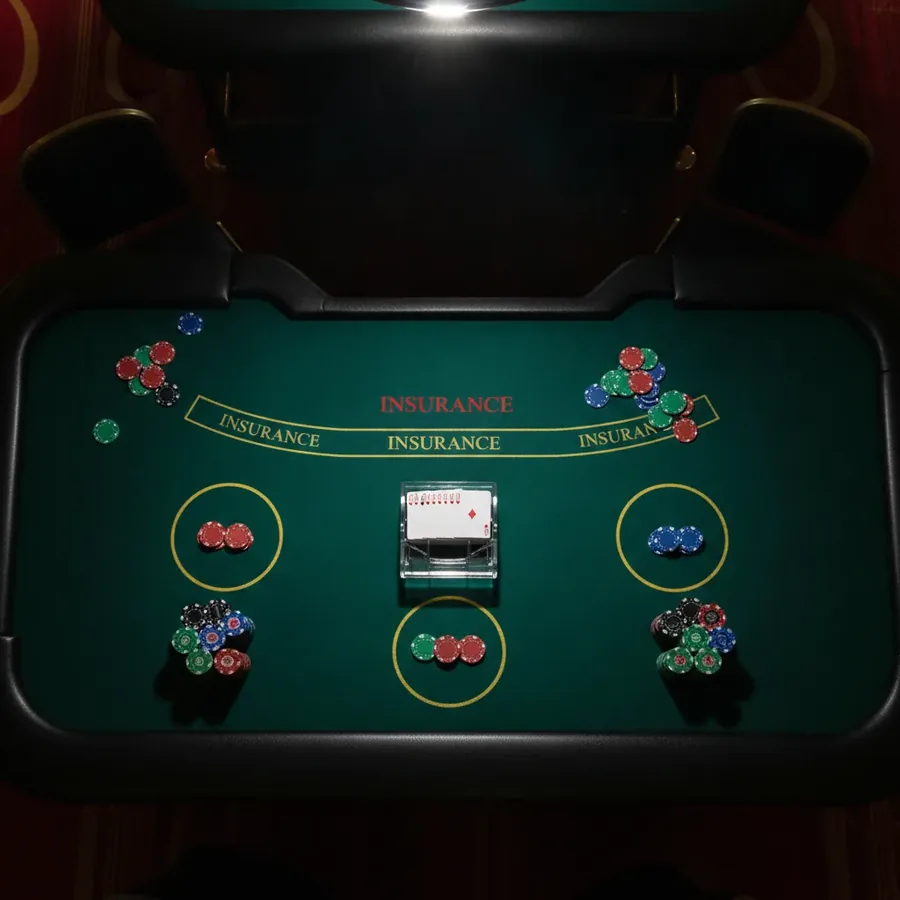
Continuous Shuffling Machine shuffles after each round
A Continuous Shuffler resets the deck composition immediately after every hand, preventing any memory of previous cards. This mechanical process effectively nullifies advantage play strategies that rely on tracking discarded cards from the shoe. The house edge remains static because the probability distribution does not shift during the session.
Quantum Blackjack Plus operates with similar reset protocols, ensuring that multipliers like the 1,000x cap do not accumulate bias over time. Standard decks use 6 to 8 shoes before reshuffling, allowing skilled counters to gain a temporary 5.88% advantage in single-deck scenarios. The continuous machine removes this window entirely, keeping the RTP locked at its theoretical baseline.
Live tables often employ physical dealers who manually shuffle, introducing human error and variable speeds into the process. Electronic shuffling machines guarantee consistent timing between rounds, reducing idle time for high rollers waiting to place bets. This efficiency supports faster gameplay volumes, which is critical for players utilizing aggressive staking plans.
Card Counting at Shuffle Master Table: why it fails
Card counting relies on predicting favorable deck compositions as low cards are removed, but continuous shuffling machines prevent this accumulation. The True Count never rises above zero because the deck is constantly restored to its initial statistical state. Consequently, the +3 threshold required to justify taking Insurance becomes irrelevant in these environments.
In contrast, single-deck games offer a 0.15% house edge and allow counters to exploit deviations from basic strategy. With 6 to 8 decks, the insurance bet carries a 7.47% house edge, making it a losing proposition unless the count is deeply positive. Continuous shuffling eliminates the deep counts necessary to overcome this negative expected value.
High rollers attempting to use counting systems at tables like Lightning Blackjack will find their edge erased instantly. The randomization ensures that every hand starts with identical probabilities, regardless of previous outcomes. This design protects the casino from professional players seeking long-term profitability through skill-based adjustments.
Split, Double Down, and Surrender in Numbers
Blackjack Liberal Vegas Strip permits splitting up to four hands and doubling after split (DAS), improving the RTP by 0.14 percentage points. Resplitting Aces adds another 0.08 percentage points to the player's advantage, lowering the house edge to 0.28%. These liberal rules significantly enhance the expected return compared to restrictive variants.
Late Surrender reduces the house edge by 0.08 percentage points by allowing players to forfeit half their bet against a dealer Ace. Early surrender, though more valuable at -0.6%, is rarely available in modern online casinos. Combining DAS with surrender creates a robust framework for minimizing losses during unfavorable deals.
Standard tables often prohibit doubling after splits or limit resplits, increasing the house edge by up to 0.22 percentage points. The absence of these options forces players into suboptimal decisions, such as hitting soft 17 instead of standing. Access to full liberal rules is essential for high rollers aiming to preserve their bankroll over extended sessions.
No Double Down on three cards
Most live blackjack variants restrict doubling to exactly two cards, eliminating the option to double on three-card totals. This rule limitation reduces the player's flexibility compared to street rules where three-card doublings are permitted. The restriction slightly increases the house edge by removing a profitable decision point in specific scenarios.
Blackjack Party by Evolution follows this standard restriction, focusing on entertainment rather than optimal mathematical play. Players must adhere to basic strategy for all two-card hands, as no additional doubling opportunities exist. This constraint simplifies decision-making but limits the potential for maximizing returns on strong hands.
Advanced players might seek out variations allowing three-card doublings, which can lower the house edge by approximately 0.02 percentage points. However, such rules are uncommon in high-limit online environments due to increased complexity and slower game pace. The standard two-card limit remains the norm for efficiency and consistency across different providers.
Blackjack variants at a glance
| Variant | Payout | House edge | Rule | Bet range |
|---|---|---|---|---|
| Blackjack 6 Decks, S17, DAS, DOA, Auszahlung 3:2, Basisstrategie | 99.54% | 0.46% | Dealer steht auf Soft 17; Verdopplung auf jeder Zweierkarte; Verdopplung nach Split erlaubt; keine Aufgabe. Basisstrategie ist für diesen Wert zwingend | Blackjack 3:2, normaler Gewinn 1:1, Insurance 2:1 |
| Blackjack Liberal Vegas Strip (liberale Regeln, 3:2) | 99.72% | 0.28% | Günstigste Regelkombination: S17 + DAS + Resplit + Late Surrender. Standardabweichung 1,15 | Blackjack 3:2, Gewinn 1:1 |
| Blackjack Ein Deck, klassische Regeln, 3:2 | 99.85% | 0.15% | Weniger Decks = niedrigerer Vorteil; ein Deck gibt ca. −0.48 Prozentpunkte gegenüber 8 Decks. Oft durch 6:5 Auszahlung kompensiert. | Blackjack 3:2, Gewinn 1:1 |
| Blackjack Split / Double / H17 – Regel-Effekte | n.a. (Regel-Modifikatoren) | H17 +0.22 Prozentpunkte; RSA −0.08 Prozentpunkte; DAS −0.14 Prozentpunkte | Dealer Hits Soft 17 verschlechtert RTP um 0.22 Prozentpunkte; Resplit Aces verbessert um 0.08 Prozentpunkte; Double After Split verbessert um ca. 0.14 Prozentpunkte; 6 Decks statt 8 – ca. 0.02 Prozentpunkte. | Double – Einsatz ×2 mit einer Karte; Split – bis 4 Hände; Ass-Split meist mit einer Karte. |
| Blackjack Insurance / Versicherung (6–8 Decks) | 92.53% | 7.47% | Separate Nebenwette bis 50% der Hauptwette, wenn der Dealer ein Ass hat. Basisstrategie schreibt IMMER Ablehnung vor (außer Karten zählen bei True Count ≥ +3). Bei einem Deck Vorteil ≈ 5.88% | Insurance 2:1 |
| Blackjack Auszahlung 6:5 statt 3:2 (6 Decks) | 98.15% | 1.85% | Ersatz von 3:2 durch 6:5 fügt exakt +1.39 Prozentpunkte zum Vorteil des Casinos hinzu – stärker als jede andere Regeländerung. Bei $10 Einsatz zahlt Blackjack $12 statt $15. | Blackjack 6:5, Gewinn 1:1 |
What Hole Card Means at a Live Table
Lightning Blackjack by Evolution operates with a maximum bet limit of 2,500 EUR. This high-stakes table allows unlimited players to compete for Lightning Multipliers up to 25x on winning hands. High rollers can wager significant amounts while chasing these multipliers, but the base RTP remains at 99.56%. The hole card mechanism is integral to determining which hands qualify for these substantial payouts.
Quantum Blackjack Plus from Playtech offers an even higher betting ceiling of 5,000 EUR per round. Players engaging in this variant utilize Quantum Multipliers that can reach up to 1,000x on specific three-card combinations totaling 21 points. The theoretical return to player is 99.57% when optimal strategy is applied consistently. Such multipliers significantly impact variance for large wagers.
Blackjack Party hosted by Evolution sets a lower entry point of 1,000 EUR for its highest stakes. This table focuses on a party atmosphere with two moderators rather than complex multiplier mechanics. The absence of hole card reveals for multipliers simplifies the payout structure compared to quantum variants. Large bets here yield standard payouts without the volatility associated with lightning features.
One Deck vs Eight Decks in House Edge
Blackjack using one deck with classic rules and a 3:2 payout delivers a house edge of only 0.15%. This represents a theoretical return to player (RTP) of 99.85%, making it statistically superior to multi-deck games. Fewer decks reduce the house advantage by approximately 0.48 percentage points compared to eight-deck shoes. Players utilizing basic strategy on single-deck tables retain more capital over extended sessions.
Standard six-deck blackjack with S17, DAS, DOA, and 3:2 payouts yields a house edge of 0.46%. The RTP for this configuration stands at 99.54%, requiring strict adherence to basic strategy for optimal results. Insurance bets on six to eight decks carry a much higher house edge of 7.47% and an RTP of 92.53%. Accepting insurance degrades the overall return unless the true count reaches +3 or higher during card counting.
The Liberal Vegas Strip variant offers the most favorable conditions with a house edge of just 0.28%. This game combines liberal rules including late surrender and resplitting to achieve an RTP of 99.72%. The standard deviation for this low-volatility game is recorded at 1.15, indicating smaller bankroll swings. High rollers seeking stability prefer this configuration over single-deck games with restrictive rules.
Perfect Pairs vs 21+3 in House Edge
This side bet is available on six to eight deck games and pays 2:1 if the dealer has a ten-value hole card. Strategy dictates always rejecting this bet unless the true count is +3 or greater during card counting. Insurance reduces long-term returns significantly compared to the main game wager.
Standard blackjack payouts operate at 1:1 for normal wins and 3:2 for natural blackjacks. A six-deck game paying 6:5 instead of 3:2 increases the house edge by exactly 1.39 percentage points. On a $10 bet, a 6:5 payout returns $12 instead of the $15 offered by a 3:2 table. This rule change negates other favorable conditions like late surrender or soft 17 standing rules.
Late surrender improves the RTP by approximately 0.08 percentage points by returning 50% of the stake. Early surrender is far more valuable, reducing the house edge by up to 0.6 percentage points, though it is rare. The combination of surrender and double after split provides modest improvements over standard play. These rule modifiers are critical for high rollers analyzing the true cost of each hand played.
Ace Split: only one card per hand
Resplitting Aces typically restricts players to receiving only one additional card per split ace. This limitation reduces the potential value of splitting pairs of aces compared to other pairs. The rule modifier for resplitting aces improves the RTP by approximately 0.08 percentage points. Allowing multiple cards per ace would further decrease the house edge significantly.
Doubling after split (DAS) is permitted in the standard six-deck game analyzed here. This rule enhances the RTP by roughly 0.14 percentage points compared to no-DAS variants. Players can double down on any hand resulting from a split, increasing strategic flexibility. High rollers benefit from DAS by maximizing profit opportunities on strong split hands.
Soft 17 rules dictate whether the dealer hits or stands on a soft seventeen. Dealer hitting on soft 17 (H17) worsens the RTP by 0.22 percentage points compared to standing. The analyzed six-deck game requires the dealer to stand on soft 17, preserving player advantage. Combining S17 with DAS and late surrender creates a mathematically robust environment for skilled players.
When can you increase your bet?
Welcome bonus funds contribute differently to wagering requirements based on game selection. Table games like blackjack contribute only 10% toward the bonus turnover obligation. Slots contribute 100%, making them the primary vehicle for clearing the bonus requirement. A 300% welcome bonus up to €2,000 plus 100 free spins requires careful allocation of play.
High rollers often seek to maximize bonus utility by playing games with higher contribution rates. Since blackjack contributes minimally, large wagers on live tables do not efficiently clear the bonus. Players must balance their desire for low-house-edge games against the need to meet turnover terms. Ignoring contribution percentages can result in unplayable balances after bonus expiration.
However, the 100 free spins included in the offer likely have specific win limitations. Understanding these constraints prevents misunderstandings regarding withdrawable funds after meeting wagering requirements. Strategic play involves prioritizing slots for turnover while minimizing losses on contributing games.
Splitting Eights vs Standing on 16
The standard strategy for high rollers dictates splitting eightes against any dealer upcard to mitigate risk, whereas standing on a hard sixteen often leads to inevitable losses. This tactical choice significantly impacts the house edge by altering the expected value of each hand played during intense sessions. High stakes players must memorize these basic rules to ensure their bankroll survives the variance inherent in blackjack tables.
Blackjack Ein Deck offers a superior RTP of 99.85% with a minimal house edge of 0.15%, making it ideal for strategic play. In contrast, Blackjack Liberal Vegas Strip provides a slightly lower RTP of 99.72% and a house edge of 0.28%. The difference between these two variants amounts to 0.13 percentage points, which accumulates over thousands of hands at higher betting levels.
When choosing between tables, the payout structure is critical because Blackjack 3:2 pays 150 EUR on a 100 EUR bet, while 6:5 only returns 120 EUR. This discrepancy adds exactly 1.39 percentage points to the casino advantage, drastically reducing long-term profitability for serious players. Always verify the payout ratio before sitting down to avoid unnecessary erosion of your funds.
Live stream with three cameras and OCR
Quantum Blackjack Plus Live by Playtech utilizes advanced technology to deliver a seamless experience with bets ranging from 1 EUR to 5,000 EUR per round. The game features Quantum Multipliers that can reach up to 1,000x on specific three-card combinations totaling 21 points for massive payouts. This multiplier potential attracts high rollers seeking extraordinary returns beyond standard table limits.
The live dealer interface includes Optical Character Recognition to instantly digitize cards, ensuring accurate tracking of bets and outcomes without manual intervention. Players can observe the action through multiple camera angles that provide comprehensive coverage of the shoe and the dealer's movements. This transparency builds trust and allows for real-time verification of every deal made during the session.
Lightning Blackjack by Evolution supports unlimited players simultaneously, creating a dynamic environment where wagers span from 1 EUR to 2,500 EUR. Lightning Multipliers offer up to 25x winnings on successful hands, adding an exciting layer of volatility to the traditional game. The RTP remains stable at 99.56%, providing a fair mathematical foundation despite the random bonus features.
When does the table max bet apply?
The maximum bet limit at Quantum Blackjack Plus Live is set at 5,000 EUR, allowing high rollers to place substantial wagers on each hand. This ceiling ensures that the casino can manage its exposure while still accommodating players who prefer aggressive betting strategies. Exceeding this limit is impossible as the system automatically restricts input beyond the designated threshold.
In comparison, Lightning Blackjack imposes a lower maximum bet of 2,500 EUR, which may influence decisions for those accustomed to higher stakes. Blackjack Party by Evolution caps bets at 1,000 EUR, offering a more accessible entry point for moderate wagering preferences. Understanding these limits helps players select tables that align with their financial capacity and risk tolerance.
High rollers should calculate their total exposure by multiplying the max bet by the number of hands they intend to play per hour. For instance, betting 5,000 EUR on twenty hands results in a potential hourly turnover of 100,000 EUR before any wins or losses occur. This calculation is essential for managing bankroll effectively and avoiding sudden depletion during winning streaks.
Shoe, Cut Card, and 75 Percent Penetration
Penetration refers to the depth of the shoe before reshuffling, with 75 percent being a common standard for many professional blackjack games. Deeper penetration allows skilled players to gain a better understanding of the remaining deck composition, potentially improving their decision-making accuracy. This factor is particularly relevant for those employing card counting techniques to gain an edge over the house.
Blackjack Ein Deck uses a single deck, eliminating concerns about penetration depth since the entire shoe is dealt in one session. However, most multi-deck games like Blackjack Liberal Vegas Strip use six to eight decks, requiring careful monitoring of the cut card position. Players must be aware of when the dealer will shuffle to adjust their betting patterns accordingly.
The house edge increases by approximately 0.48 percentage points when comparing a single deck game to an eight-deck variant due to rule variations. This statistical shift highlights the importance of selecting games with favorable conditions, such as single deck options, whenever available. High rollers should prioritize these opportunities to maximize their expected return over extended playing periods.
Chose Wrong Table for 5 EUR Bankroll
A bankroll of 5 EUR is insufficient for most live blackjack tables, which typically start at minimum bets of 1 EUR to 1,000 EUR. Even at the lowest end, the variance can quickly deplete such a small fund, leading to immediate termination of play. High rollers rarely operate with such limited capital, making this scenario more applicable to casual or recreational players.
Table Games contribute only 10% toward the wagering requirement of the 300% welcome bonus up to 2,000 EUR, making them inefficient for clearing bonuses. Slots contribute 100%, meaning that playing blackjack would require ten times the turnover compared to slots to meet the same condition. This restriction discourages high-stakes players from using table games to fulfill bonus obligations efficiently.
The insurance side bet has a poor RTP of 92.53% and a house edge of 7.47%, making it highly unfavorable for any strategy. This negative expectation holds true regardless of the bankroll size, as the mathematical disadvantage remains constant across all betting levels. Avoiding such side bets is crucial for maintaining a positive expected value throughout the gaming session.
Contact
Live - online chat
Banking





Providers








RockNRolla Casino 2026